
The Importance of Sensory Development and Sensory Play
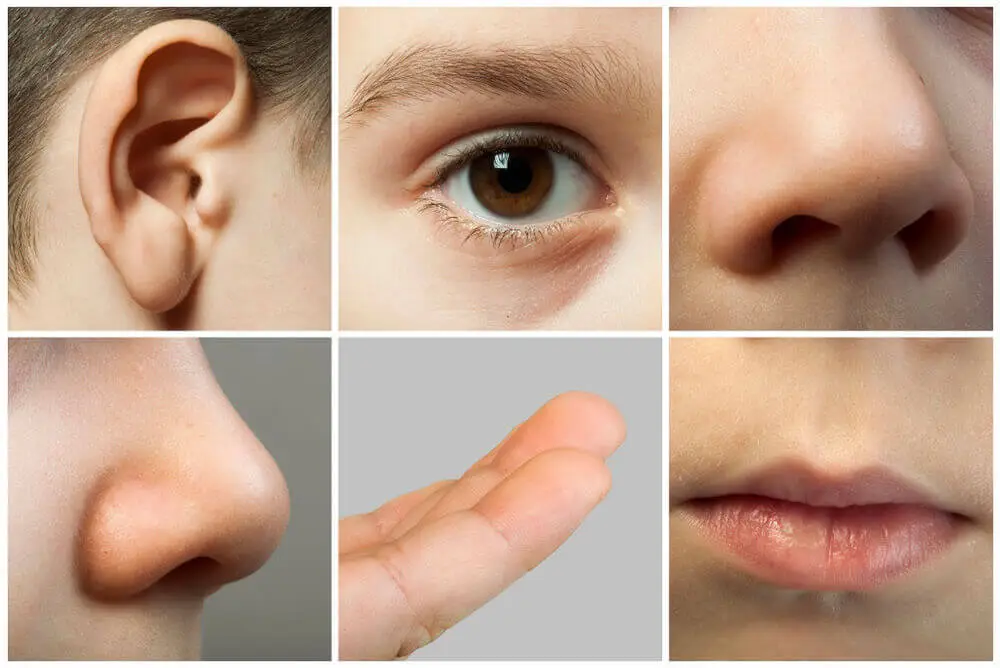
From infancy and onward through early childhood, children use their senses to explore and learn about their world. They do this by touching, smelling and tasting, hearing, seeing and moving around. Providing opportunities for children to explore their world through their senses is a critical step to building neural connections in their brain’s pathways, because as humans take in sensory information, they are building those pathways (Stiles & Jernigan, 2010). According to Stiles & Jernigan, the brain cannot develop normally in the absence of essential environmental input. Kolb and Gibb (2011) indicate that an enhanced sensory environment leads to enhanced cognitive and motor function. These studies point out how important sensory experiences are for the enhanced development of a child’s brain. Additionally, synapses (connections) in the brain are made based on life experiences, a process known as neuroplasticity. This is what allows the brain to “rewire” itself if there is new information learned, and to recover from injury.
Sensory systems develop optimally during a period known as the critical period, which is mostly during the early years. This is another reason that sensory play is so important during the early years, for it is through play that a child uses and thereby develops the various sensory systems. And when a child uses multiple sensory systems to play and explore, they are more likely to learn better and retain more information. Sensory play may also be helpful in calming an anxious child.
Let’s take a closer look at what sensory play is and its impact on development, in terms of each of these sensory systems:
Touch (the tactile system):
Babies first experience touch after birth by receiving hugs and kisses from their parents, being wrapped in blankets, being bathed, being dried off after a bath, and being dressed and undressed. Babies begin to explore touch on their own by reaching out and grabbing a parent’s hand, grabbing toys, and bringing them to their mouths. This touch information teaches them about size, shape, and texture. Through touch, a child also learns all about rough & smooth, hot & cold and sharp & soft. This touch information is laying the groundwork for later skills that use the sense of touch, such as combing hair and gathering it in a ponytail, holding a pencil, buttoning and unbuttoning, finding a fork among other silverware or a key within a “junk” drawer without having to look, fitting a key into a lock even in a dark hallway, and knowing to keep hands away from hot, sharp etc.
Some of the toys that can enhance the development of the tactile system include sand play, cuddle balls, foam building blocks, and therapy putty.
Hearing:
Babies first experience hearing their parents’ voices, and the voices of other members of their household. They learn all about different sounds by exploring toys such as rattles and mobiles. They learn about music from toys and from people singing. Music and singing may also be used for calming. Babies learn to calm to a voice, learn to coo, and use different cries for different needs. These skills are laying the groundwork for voice, speech and language skills development, which impact such skills as communicating with words, listening in school in order to learn, and the development of music appreciation.
Vision:
Babies first experience vision by focusing closely on their mother’s face immediately after birth. As newborns, babies have better peripheral (side) vision than central vision. At a few weeks, they develop better central vision, and at about two months old, babies begin tracking a moving object with their eyes as their visual coordination improves. Then, they move on to batting at moving objects such as a mobile at about 3 months, as they begin to develop eye-hand coordination. At about five months, babies can see how far an item is from them, which is the beginning of the development of depth perception. At about eight months babies begin crawling around in their environment, which further helps to develop depth perception and visual coordination. This is laying the groundwork for all skills that use vision in life, including such things as reading, writing, performing daily tasks, copying from the board, drawing, coloring and cutting.
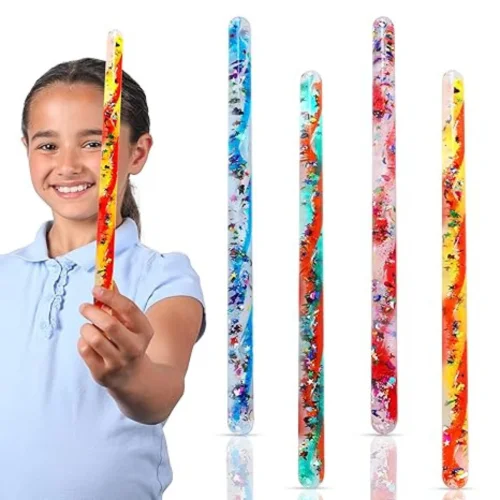
Some of the toys that can enhance development of vision and visual perception include the glitter wands, ooze tubes, glitter gel shapes and glitter lava lamps.
Taste and smell:
The sense of taste and smell are closely linked and work together, and are well developed at birth. Babies prefer sweet, and can taste the difference between sweet and bitter. The mouth is more sensitive than the hands and fingers. Babies begin to bring objects such as toys and their blanket to their mouths at about three months. Babies use their mouths as a way of exploring and learning about their world, which is why they mouth almost anything they find, which teaches them all about tastes and textures. All this oral play is preparing their mouth for eating foods, first by accepting a spoon in their mouth, and later on finger foods. It is laying the groundwork for acceptance of a variety of tastes and textures in foods, and for the enjoyment that eating brings.
Movement sense (Vestibular):
This is the internal system that controls our sense of balance and motion. It also coordinates eye and head movements and helps to coordinate the two sides of our body. The information for this system comes from hair cells in the inner ear. This sense is strengthened via movement and changes in position. Input to this system is provided when a baby is picked up, rocked and placed in a swing, and when babies perform movements on their own such as rolling over, crawling, walking and running. As toddlers develop, they explore all kinds of movement in their environment such as playground swings, slides and merry-go-rounds, and activities such as riding toys and tricycles. All of this movement exploration and participation is laying the groundwork for balance, feeling safe when moving (such as when riding a bike, or riding in a car or train) and knowing when we are upright, upside down, leaning backwards or lying down.
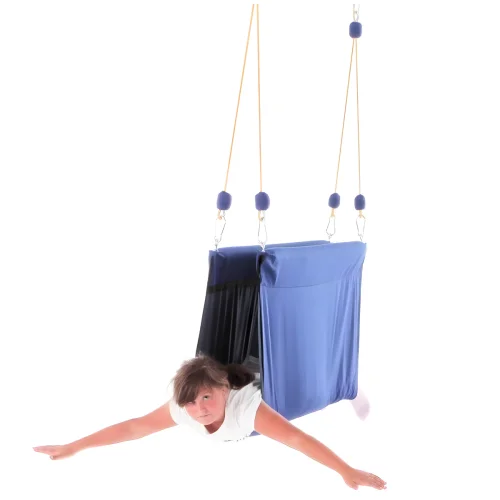
Some of the toys that can enhance the development of the vestibular system include the helicopter swing, balance boards, hammocks, Ride on Horse Toy and anything else that provides for movement.
Proprioception (body awareness sense):
This is the internal sense that helps us understand where our body parts are in relation to each other, how to use our bodies efficiently for all tasks, and how much force is needed for a particular activity. The information for this system comes from the skin, muscles and joints. Babies learn about their bodies by moving, and this system works closely with the sense of touch. Babies learn via tummy time (for example learning how to position the arms to push on the floor and lift their head, and eventually to push in order to roll over), by kicking their legs against their infant seat, by reaching for toys, by patting their blanket, by bringing hands to face, tummy and feet, and mouthing their toes, among other activities. This is laying the groundwork for a child’s ability to navigate their world without tripping or banging into objects, knowing how much force is needed to throw a ball, and knowing how strongly to grip a pencil or scissors. It is the system that allows a child to be coordinated and do movements smoothly.
Some of the toys that can provide proprioceptive information include foam building Bricks, the sensory tents, connector toys, the therapy horse, variety of climbing equipment, and the t-shape and Swings.
References
Stiles, J. & Jernigan, G.L. (2010). The basics of brain development. Neuropsychology Review, 20, 327-348. ;
Kolb, B. & Gibb, R. (2011). Brain plasticity and behavior in the developing brain. J Can Acad Child Adolesc Psychiatry, 20(4), 265–276.