
The Importance Of Sensory Play In A Child's Early Childhood Years
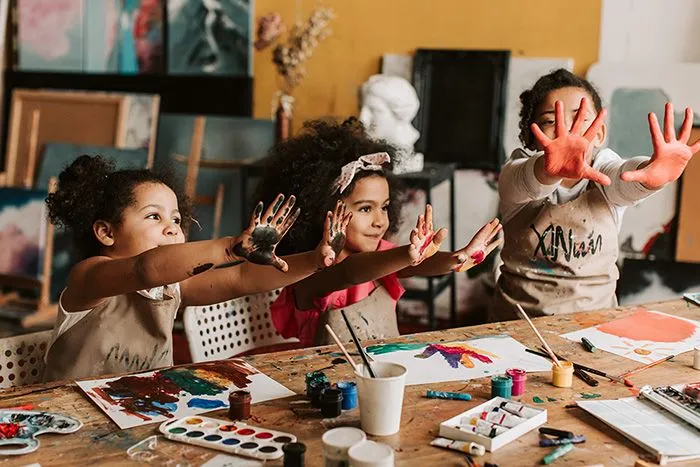
Play is an essential part of a child's development and helps effective learning. When used in connection with the Sensory Approach, it can help kids develop cognitively, physically, and socially.
Kids in their early childhood use their senses the most to perceive the world, and it comes naturally to them. This sensory exploration allows kids to become familiar with their surroundings and become accustomed to them. Building an understanding of objects, spaces, people and interactions are yet to be fully developed.
Including sensory play in their daily activities can develop various areas of a child's brain, like motor skills, learning a language and social reasoning, and more.
Importance of play in child development
Playing encourages children to think creatively; when they are allowed to play freely in a safe atmosphere, they will try out various things and share their results with you if they think they are intriguing. It also aids in the development of skills such as eye-hand coordination, concentration on various tasks, and attention span.
When a good amount of playtime is given to the kids, it gives them confidence and opportunities to find new solutions to new problems on their own without being guided towards particular answers. This provides a sense of identity and lets them develop empowered personalities by creating mental models.
Playing also teaches valuable life lessons like sharing, teamwork, and leadership.
So, What Is Sensory Play?
Sensory play is frequently misunderstood as being intended for children with sensory integration issues and used to improve their abilities. That, however, is not the case.
Sensory play is beneficial for all children because it stimulates their sense organs and assists them in determining how they feel about textures, smells, sounds, sights, temperatures, or attitudes.
In addition to promoting sensory development and providing cognitive stimulation, sensory play can increase engagement with learning tasks. It improves their skills and tolerance for new experiences. It also aids in the development of skills requiring movement and balance.
Sensory-based play varies depending on the games appropriate for your child's age, behavior, and ability.
For instance, Here are a few things you can try with a toddler which could be both fun and unique:
- Play with water pressure on extraordinary objects like watermelon seeds or cucumbers
- Attempt a Rubik's cube trick with hard rubber balls
- Gaze through everyday lenses like wrapping paper or tissue paper
If a child is pre-school aged, you can try
Try playing musical instruments and paying attention to the tone and pitch when they hit or blow through them softly or forcefully.
Playing outside with nature, which is full of colors, movement, textures, sounds, and smells, is probably the simplest way to help children engage their senses.

Benefits of Sensory Play
Big or small, every playroom can benefit from sensory-led fun than one can imagine. Here are just a few of the benefits of introducing sensory play in a room:
Sensory play gives children the opportunity to explore, observe and investigate. This helps them experiment with things and make their conclusions.
Fine motor skills and hand strength.
It also teaches their brain how to make stronger connections to sensory information and distinguish between what is useful and what can be ignored.
For example - kids get distracted while studying if there is a lot of noise, or the television is on. Sensory play can help kids concentrate on what they're doing while diverting their attention away from less important matters.
It helps children calm down when they feel agitated, anxious, or nervous.
It enhances scientific thinking and problem-solving.
When often addressed during the early stages of development, this particular aspect of play provides an essential foundation for understanding others and increases the sense of empathy.
They are more likely to be emotionally stable and have the ability to manage their feelings well.
Children's natural urge to engage in sensory play should be encouraged and supported in family and early educational experiences.
Conclusion
Nowadays, sensory play has become popular with children in daycare centers, where they also use kids' learning experiences as part of therapy or practice. It is not just that these types of play offer benefits to the kids; they lead to better overall health outcomes.