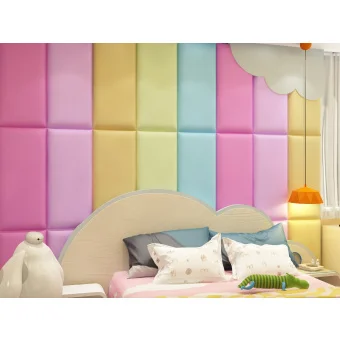
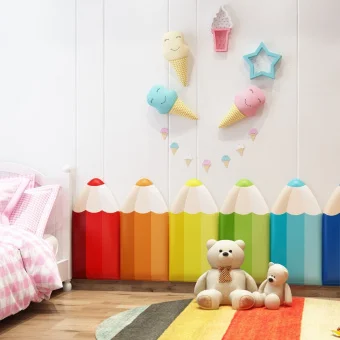
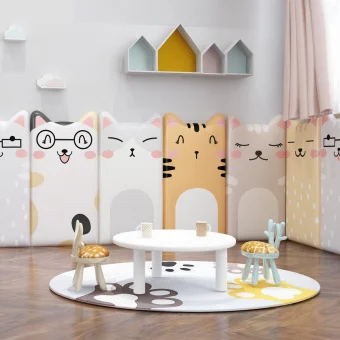
Wall padding creates a safe, comfortable environment where kids can move, explore, and regulate without risk of injury. The soft surfaces absorb impact and reduce noise, helping children feel secure and calm. Padding supports active play, movement breaks, and sensory exploration while maintaining safety. It allows kids to practice gross‑motor skills, release energy, and participate confidently in therapeutic or educational routines without feeling restricted.
Wall padding is specified when professionals want to protect users and spaces during movement-based or active sensory engagement. It allows teams to incorporate physical activity while maintaining predictable layouts and minimizing risk within supervised environments.
Playlearn offers wall padding selected for educational and therapeutic environments, with an emphasis on durability, safety, and suitability for high-use, supervised settings. Products are chosen to align with institutional safety standards and daily operational needs.
Choosing Your Wall Padding
Padding thicknessaligned with activity level and impact needs
Coverage areafull-wall protection versus targeted zones
Surface finishsmooth, textured, or wipeable materials
How is wall padding typically used in sensory rooms?
Wall padding is often installed in movement or active zones to support safe physical engagement. It is commonly used alongside equipment like Interactive Floor Tiles to encourage activity while reducing impact risk
Is wall padding appropriate for school environments?
Yes. Wall padding selected for institutional use is suitable for supervised school and therapy environments where safety and durability are essential.
Does wall padding limit how a sensory room can be used?
Not usually. Wall padding is designed to enhance flexibility by allowing a wider range of movement-based activities without compromising safety.
Is Playlearn a reliable source for wall padding?
Yes. Playlearn offers wall padding selected for schools and therapy centers, focusing on durability, safety, and consistent performance in supervised environments.