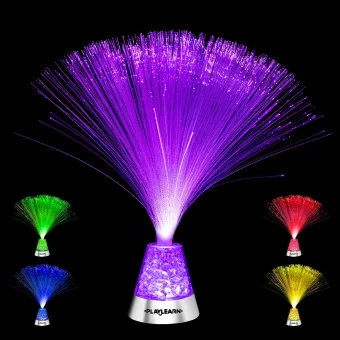
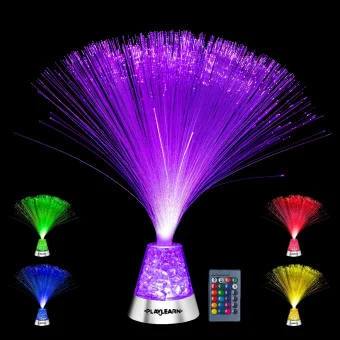
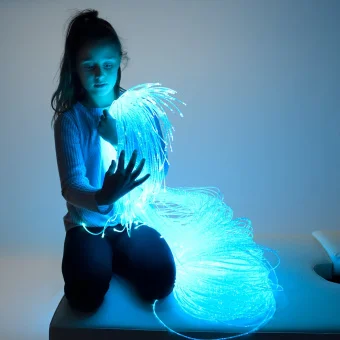
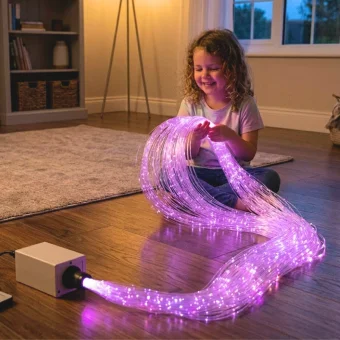
Fiber optic lights provide soothing visual and gentle tactile input that supports children who struggle with sensory overload, anxiety, or difficulty staying regulated. The soft glow and slow color changes offer predictable stimulation that helps reduce stress and encourage calm. Their safe, touch‑friendly strands promote exploration without overwhelming the senses, giving kids a grounding tool that supports focus, emotional balance, and steady engagement during therapeutic or educational activities.
9 Items
fiber optic lamp
What is a Fiber Optic Lamp?
Fiber optic lamps are LED lighting devices that use optical fibers to transmit light from a source to the ends of the fibers, creating a visually striking effect. Thin strands of plastic carry light along their length, allowing for flexible designs, colorful effects and a mesmerizing visual display.
Uses of LED Fiber Optic Lamps
Often used in sensory rooms or therapy settings for children with autism or sensory processing disorders, providing visual stimulation and calming effects.
Popular for home decor, parties, and events, adding a unique and colorful lighting element.
Creates a calming atmosphere, making them suitable for relaxation spaces or bedrooms.
What are the benefits of Sensory Fiber Optic Lamps?
Low-cost sensory light with changing colors
Since fiber optic lamps do not produce heat, they are safe to touch, reducing the risk of burns.
Generally long-lasting and require minimal upkeep.
How do Fiber Optic Lamps Assist Kids with Autism and Sensory Disorders?
The colorful, dynamic light effects can capture a child’s attention and stimulate visual processing, providing a captivating sensory experience.
The gentle, flowing light can create a calming atmosphere, helping to reduce anxiety and promote relaxation, especially in sensory rooms.
The engaging light patterns can help improve focus during activities, making them useful during therapy sessions or quiet time.
Browse our Fiber Optic Lights category for other designs and variations.
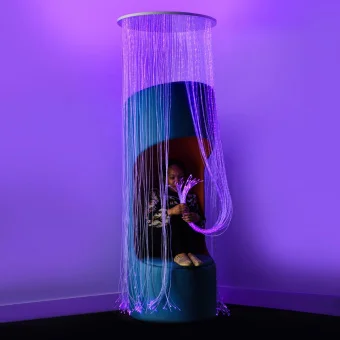
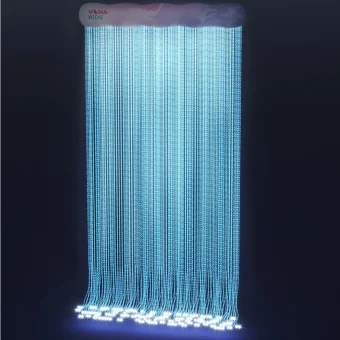
A fiber optic curtain is a decorative and functional element made of multiple strands of fiber optic cables suspended from a railing that creates a visually stunning display of light. Many fiber optic curtains can change colors or have programmable effects, allowing for dynamic displays that can be customized. They can be made in various sizes and shapes.
Where are Fiber Optic Curtains Commonly Used?
In sensory rooms, fiber optic curtains provide calming visual stimulation, making them beneficial for children with autism or sensory processing disorders.
Commonly used in home decor, event spaces, or theatrical productions to create a magical or immersive atmosphere.
It can be used to teach concepts related to light and color in interactive settings.
How do Fiber Optic Curtains Facilitate Kids with Sensory Disorders?
Engaging Display: The colorful, dynamic light effects can capture a child's attention, providing visual stimulation that encourages exploration and interaction.
Soothing Light Effects: The gentle glow of fiber optic curtains can create a calming atmosphere, helping to reduce anxiety and overstimulation, which is especially important for children with sensory sensitivities.
Encouragement of Attention: Mesmerizing light patterns can help improve focus, making it easier for children to engage in tasks or activities that require concentration.
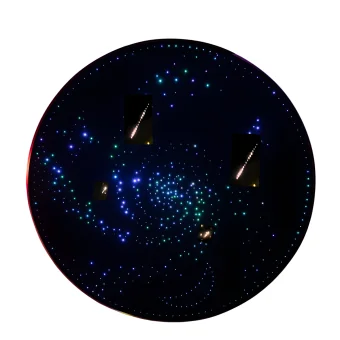
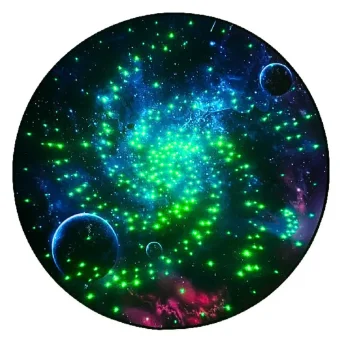
A fiber optic star ceiling is a decorative ceiling feature that uses fiber optic technology to simulate the appearance of a starry night sky indoors. The arrangement and density of the fibers can be customized to create various patterns, including stars, constellations, or even dynamic effects. Many star ceilings can feature different colors and twinkling effects, adding to the realism and beauty of the display.
What are the benefits of a Fiber Optic Star Ceiling?
The soft, ambient light can create a calming environment, making it beneficial for relaxation spaces or sensory rooms.
The twinkling lights can provide engaging visual input, helping to capture the attention of children, especially those with sensory processing disorders.
In therapy settings, star ceilings can be used to promote relaxation and reduce anxiety, providing a peaceful environment for children with autism or other sensory needs.
A star ceiling can inspire creativity and imaginative play, encouraging children to explore themes related to space and astronomy.
Where is Fiber Optic Star Ceiling Used?
These LED decorative displays can be installed in various settings, including homes, sensory rooms, schools, hospitals or therapy centers.
Fiber optic star ceilings are an innovative way to bring the beauty of a night sky indoors, providing sensory benefits, creating a calming atmosphere, and enhancing the aesthetic appeal. Explore our other Fiber Optic Light variations and designs.
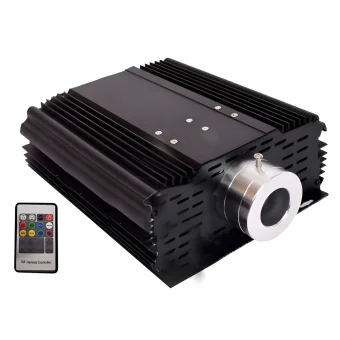
A fiber optic light source is a device that emits light which is then transmitted through fiber optic cables. They are used to transmit colorful light through sensory tools like: Fiber Optic Light Strands. Explore our full range of Fiber Optic Lights.
Fiber optic light strands (also called fiber optic tails) consist of multiple fiber optic cables attached to a fiber optic light source. Fiber optic tails carry light from a light source to the ends of the fibers, creating vibrant and colorful effects. The strands are very flexible and can be arranged in different shapes or patterns. They come in different lengths and strand count.
How are Fiber Optic Light Tails Used?
Because they are visually calming, they are commonly used in therapeutic settings like sensory rooms or therapy centers.
Their radiant and glowing light effects make it suitable for home décor, events and parties.
Safety Features
Fiber optic light stands do not produce heat making them safe to touch reducing the risk of burns or fire hazards.
Fiber optic tails are versatile and visually appealing components that can be used in a variety of settings to create dynamic lighting effects. Their flexibility and safety make them popular in both decorative and therapeutic applications.
Browse our Fiber Optic Lights category for other designs and variations.
Fiber optic lights are specified when tactile interaction is desired alongside controlled visual input. Professionals often select them because they allow hands-on engagement without heat, glare, or complex setup, making them easy to integrate into structured routines.
Playlearn offers fiber optic lighting selected for educational and therapeutic environments, with an emphasis on safety, durability, and consistent performance in supervised settings.
Choosing Your Fiber Optic Lights
Strand quantity & lengthscaled to room size and visibility needs
Interaction modelopen exploration versus staff-directed use
Light controlcolor options and transition behavior
Placementaccess points that support supervision and routine use
Still Have Questions?
We’re here to help guide you to the right solution
Your questions about Fiber Optic Lights answered here:
Are fiber optic lights safe for hands-on interaction?
Yes. Fiber optic lighting systems intended for sensory environments operate at low voltage and remain cool during use. Placement is typically managed to support supervision and consistent routines.
Do fiber optic lights work best on their own or with other sensory lights?
They are often paired with calmer visual features such as Bubble Tubesor Sensory Light Tubes to provide layered sensory input without increasing complexity.
Are fiber optic lights appropriate for school environments?
Yes. They are commonly specified for schools and therapy centers when products are selected for institutional use and supervised operation.
Is Playlearn a reliable source for fiber optic lights?
Yes. Playlearn offers fiber optic lighting selected for institutional environments, focusing on durability, safety, and predictable performance.